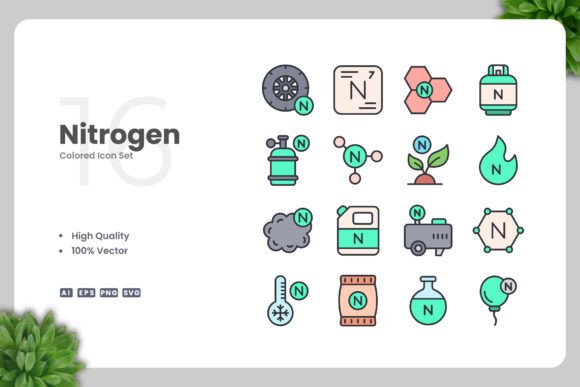
Nitrogen Colored Icons for Graphics and Branding
First Impressions: A Modern, Versatile Design Asset
The Nitrogen Colored Icons immediately catch the eye with their simple and clean design. The subtle color palette and minimalistic approach suggest a modern, professional aesthetic that can easily adapt to various brand personalities. Whether a business leans toward being friendly, elegant, or playful, these icons offer a flexible foundation that supports different moods without overwhelming the viewer.
Real-World Application: From Bakery to Boutique
Imagine working on a local bakery’s branding project. The Nitrogen Colored Icons could serve as a visual anchor for product labels, menu graphics, and social media posts. Their clarity makes them ideal for small text areas, while their scalability ensures they remain sharp across digital and print formats. For a handmade soap business, these icons could be used in packaging design, hang tags, and promotional materials, reinforcing a cohesive brand identity without competing with the product itself.
Supporting Business Presentation
As a brand designer, one of the key goals is to create a stronger first impression. Nitrogen Colored Icons help achieve this by adding visual interest without clutter. They enhance product recognition, especially when used consistently across packaging, labels, and marketing visuals. This consistency builds customer trust and reinforces a polished, professional look that aligns with the brand’s values.
Best Uses for Nitrogen Colored Icons
These icons shine in product labels, where their simplicity allows for clear communication. They also work well as hero graphics on website banners or promotional posters. In a boutique setting, they can be used as decorative brand elements that elevate the overall aesthetic. Seasonal campaigns benefit from their versatility, as they can be re-colored and resized to match the theme of the event or holiday.
Where to Use with Caution
While Nitrogen Colored Icons are highly adaptable, they may not be suitable for all design scenarios. In formal corporate branding, their casual feel might clash with the desired professionalism. On very small labels, the details could become lost. Similarly, in crowded layouts or areas with dense text, these icons might distract from the main message. It’s important to test them in context before finalizing any design.
Practical Designer Notes
When considering a graphic design asset like Nitrogen Colored Icons, it’s crucial to test it on real packaging mockups. Check how it looks in black and white to ensure it remains effective without color. Preview it on small labels to confirm legibility. Also, review how it interacts with different font styles—serif, sans serif, script, or handwritten—to maintain visual harmony.
Commercial Use and Licensing
Before using Nitrogen Colored Icons for client work or physical product sales, verify the commercial license. Ensure it covers all intended uses, including print and digital formats. This step is essential for maintaining legal compliance and avoiding potential issues down the line.
Enhancing Visual Hierarchy and Brand Identity
These icons contribute to a clearer visual hierarchy by guiding the viewer’s attention without overwhelming the design. When used strategically, they support a more consistent brand identity across multiple touchpoints. Whether it’s a food label, a social media graphic, or a website banner, Nitrogen Colored Icons help create a unified look that resonates with the target audience.
Testing and Final Checks
Always inspect the PNG transparency and SVG editability to ensure the icons work seamlessly in different design software. Test them against low-contrast backgrounds to avoid visibility issues. Compare them with competitor packaging to ensure your brand stands out while maintaining a professional appearance.
Conclusion: A Valuable Addition to Your Design Toolkit
Nitrogen Colored Icons offer a practical solution for small business branding, packaging design, and promotional visuals. Their clean, scalable format makes them ideal for a wide range of applications, from product labels to social media graphics. By understanding their strengths and limitations, designers can leverage this asset to create compelling, professional designs that support local businesses and enhance customer engagement.